Protecting 3D printer filament from humidity with jank
I used to let all my filament for 3D printing sit out in the open, for it to slowly absorb the humidity in my apartment. They’re not really supposed to do that, as the materials become brittle and the print quality becomes poor.
After one particularly bad case with a roll of white PLA, I decided to do something about it. Supporting the Pareto Principle, I believe I got a 80% results from 20% of the work.
Here is what I did:
- Bought an IKEA Sammla box just large enough to hold four 1 kg rolls of filament
- Filled the bottom of the box with 500 g of color-changing silica gel
- Printed 10 clips, to create a better seal between lid and box
- Created a make-shift gasket by folding two layers of duct-tape
- Taped a cheap hygrometer I had lying around to the lid, such that I can observe the humidity
The final setup is seen below
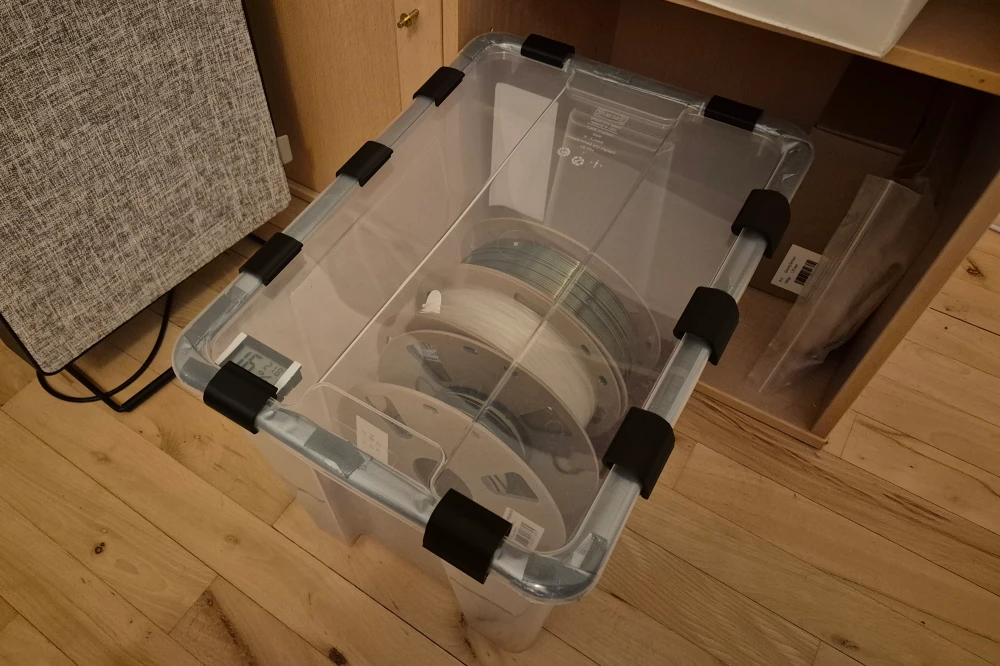
My janky filament storage solution.
The relative humidity typically hovers around 14-15% but obviously spikes when the lid is lifted. Here, the make-shift duct-tape gasket really does do a lot of work! For reference, the room where the filament is stored typically has a relative humidity of around 50%.
I also purchased a filament dryer, to dry the really poorly performing filament and the silica, once that is saturated with moisture. I could dry the silica in my oven, but I really don’t trust the food-safety of those pearls.
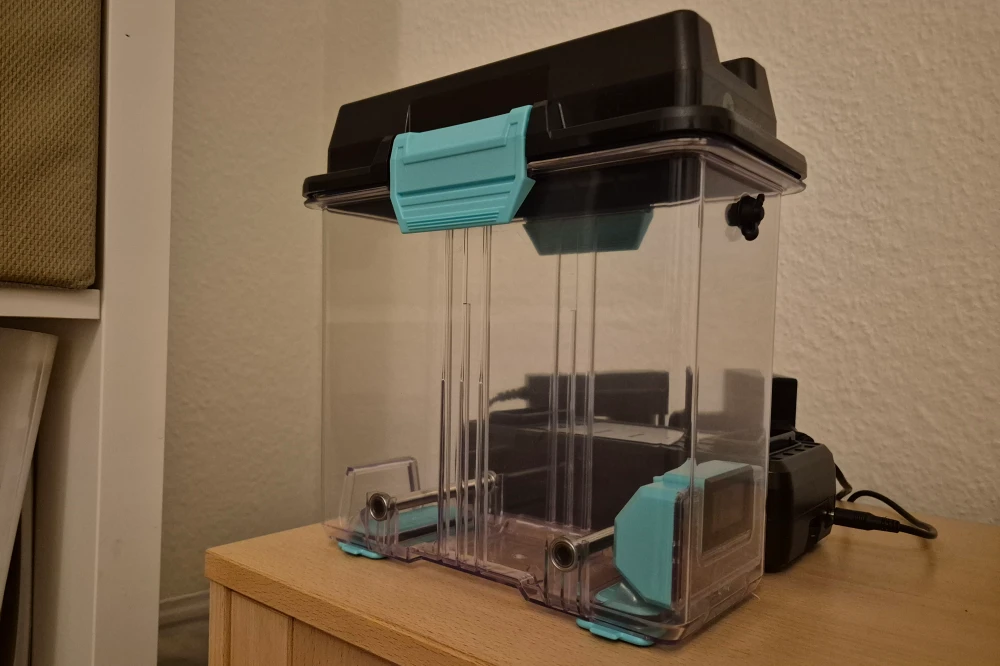
Polymaker Polydryer filament dryer.
I know this is far from production-grade, but this setup cost me next to nothing (disregarding the dryer). I do not switch filament often and use the printer mainly in bursts, so the downsides of removing the filament and placing it in the box are negligible.
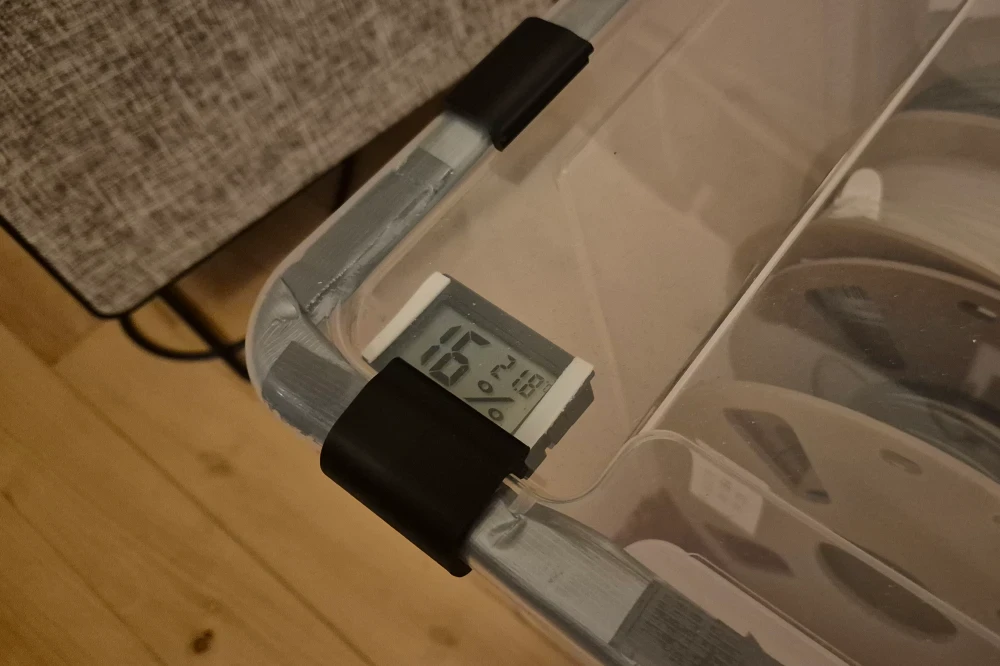
Close-up of cheap hygrometer and make-shift duct-tape gasket.
Published 27. February 2026
Last modified 27. February 2026